AI systems & production
Barnicle Productions
Product thinking, research, offers, content, production knowledge, sales material, and the operating rules behind client delivery.
 Barnicle Productions
Founder case study · how I work
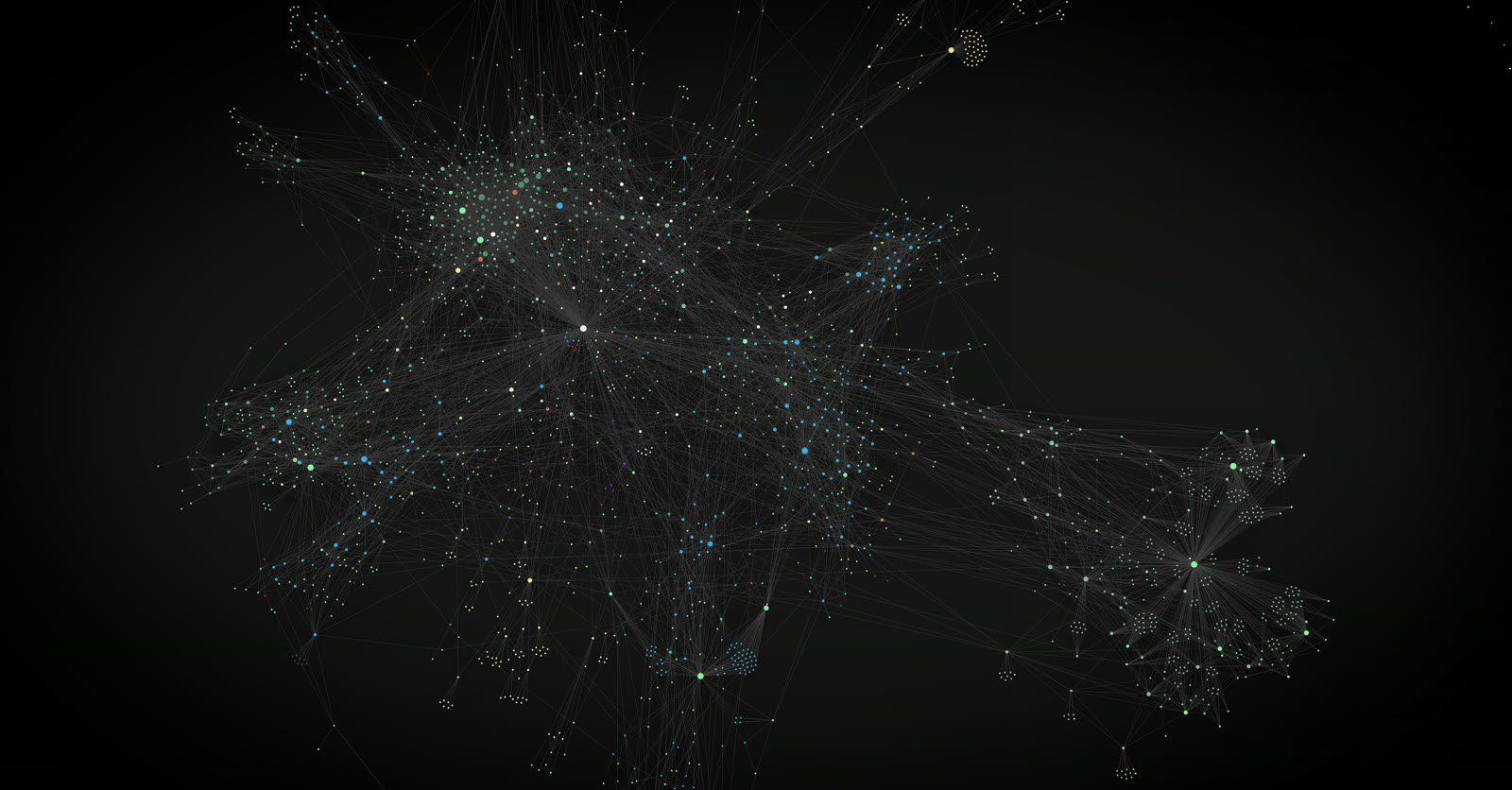
I use my own business as the first client. My private second brain helps me capture and refine what I know across Barnicle Productions, Grow Wild, my photography practice, and research. Client work stays in separate, scoped workspaces; only reviewed, de-identified implementation lessons may be proposed back.
Capture broadly. Separate places to know. Controlled ways to act.
 Brian remains the decision point
The actual problem
I have several kinds of work moving at once. They are connected through me, but they should not all know the same things, follow the same rules, or inherit the same permissions. A useful second brain has to help me make connections without flattening those boundaries. That means ideas leave my head faster, context is easier to recover, client boundaries stay intact, and reviewed knowledge can be reused without starting over.
AI systems & production
Product thinking, research, offers, content, production knowledge, sales material, and the operating rules behind client delivery.
Field business
Field observations, horticultural research, service knowledge, content ideas, and business operations—kept in its own working context.
Creative practice
Projects, visual references, production notes, archive knowledge, and ideas that belong to the creative practice rather than a client system.
Bounded by client
One purpose-bound context per client. Client-specific material does not become shared knowledge for another client or business.
Restricted
Personal notes, unfinished thinking, and owner-only decisions stay restricted unless I deliberately promote them into a business workflow.
The organizing idea: broad capture should not create broad access.
How it works today
Today I use several controlled intake lanes—not one universal chat box. The system preserves the raw input, helps me refine and route it, and gives each job only the approved context it needs.

Working today
Quick Capture, general raw intake, web clips, field notes, research drops, and dedicated content lanes.
Protected rule
The original stays intact. What I say first enters as a candidate, not as a fact or company policy.
Prometheus layer
Check for duplicates, choose processing depth, attach sources, summarize, flag uncertainty, and propose a destination.
Bounded context
A business, client, or project workspace receives only the approved context required for the job.
Qualified workflow
A specialized workflow retrieves, compares, drafts, or builds. It does not inherit authority merely because it has context.
Owner gate
Consequential work is required to receive a separate check and my approval before it counts, moves, publishes, or acts.
What capture looks like
These are representative examples, not live client records. The value is not simply saving a sentence. It is preserving the thought, attaching the right context, and keeping it out of places where it does not belong.
Field observation
“The same plant question came up again today. This may belong in the field guide.”
Preserve the note, connect it to a source, and hold any recommendation until verified.
Client correction
“This sounds polished, but it is not how the owner explains the service.”
Suggest a correction inside the bounded client workspace. Do not generalize the client’s language.
Production idea
“The real story is what happens before the camera turns on.”
Connect the idea to a series, outline, or production brief without treating it as approved copy.
Research claim
“This new AI model looks useful, but the only source so far is the vendor.”
Record the claim, source it, mark the uncertainty, and keep it out of public positioning.
Owner thought
“This may become a business idea, but right now it is just mine to think through.”
Keep it restricted unless I deliberately promote it into a business or project context.
The distinction that matters
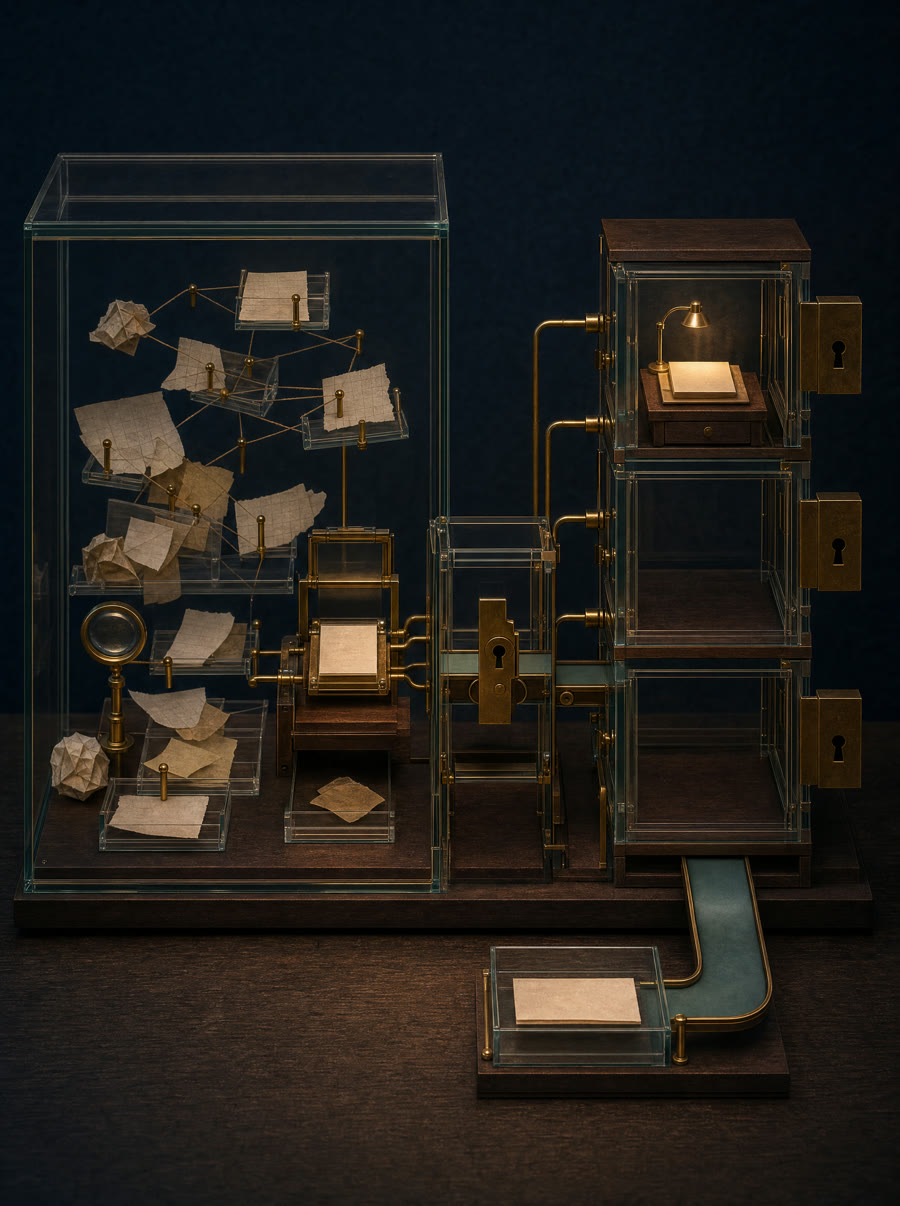
My private vault is the source-processing and project-intelligence layer. Its job is to preserve raw material, connect it to evidence, make uncertainty visible, and help me retrieve what is relevant.
Execution happens in smaller workspaces. A content workflow, research project, proposal system, or client tool receives a narrow packet of approved context. It should not need the whole vault—and a client system should never receive another client’s material.
Prometheus helps decide what matters and where it belongs. Specialized workflows do the work. I decide what becomes trusted, shareable, or actionable.
How it helps me work
I do not want one generic assistant pretending all work is the same. Each lane uses different source material, language, rules, review points, and definitions of done.
Barnicle Productions
Product research and production knowledge can connect, but public claims still pass separate truth and permission checks.
Grow Wild
A field observation can become a research question without becoming an unverified recommendation.
Photography & fine art
The creative practice can draw from my experience without inheriting a client’s private brief or a business workflow’s authority.
Client delivery
The system can retain reviewed, de-identified implementation lessons without treating client material as shared knowledge.
Research & product development
Promising ideas remain claims until they are sourced, tested, and accepted into the relevant operating context.
The governance layer
Good context makes AI more capable. Governance keeps that capability proportional to the job. Some boundaries are technical controls; others are process controls and review gates. I label the difference instead of calling the whole system autonomous.
Rules earned from failures
These are not decorative principles. Each one closes a failure mode that looks reasonable until real work reaches it.
An intake note is a preserved candidate. It becomes trusted context only after the right review.
Research quality depends on whether the relevant claims and contradictions were examined, not how many links were collected.
Removing a button does not remove the capability behind it. Consequential controls need behavioral verification.
Accepted research, approved copy, a staged artifact, and an activated action are different states with different receipts.
A statement can be accurate and still be private, out of scope, unapproved, or wrong for the channel.
A finished job can return a lesson for review. It does not silently change the operating rules that govern the next job.
The honest status
I would rather show the boundary than sell a future feature as a present fact.
Working today
Manual by design
Building next
Direction, not a claim of finished automation.
The glass box
Work on a prospect proposal surfaced a clearer way to explain the operating model. I separated the prospect-specific material from the reusable method before publishing this founder case study.
What the audit caught, what the spec misunderstood, and how I tested the fix before keeping it.
Read the audit → Field guideThe layered context method behind small, interpretable execution workspaces.
Read the guide → How we workThe staged, human-gated process used to keep source material and decisions visible.
See the process → Governance layerWhy accuracy and permission are separate checks before anything becomes public.
See the two gates →What I build for clients
My system is shaped by my businesses, history, risks, and working style. A client needs a smaller system built around one real bottleneck, the knowledge required to handle it, and the authority that workflow is actually allowed to have.
We find the recurring pain, capture one real workflow, build the smallest useful knowledge layer, and prove the first governed lane before adding more.